


Running a WooCommerce store in 2026 is both an exciting opportunity and a real challenge. To succeed, you need proven strategies to increase WooCommerce sales, drive targeted traffic, and convert visitors into paying customers. The good news is that more people are shopping online than ever before, but competition has also never been fiercer.
Simply having a store is no longer enough. To grow your revenue consistently, you need the right traffic coming to the right pages, combined with a shopping experience that turns visitors into paying customers.
This guide covers everything you need to know. Whether you are just starting out or looking to scale an existing store, you will find practical, actionable strategies that work right now. Let us get into it.
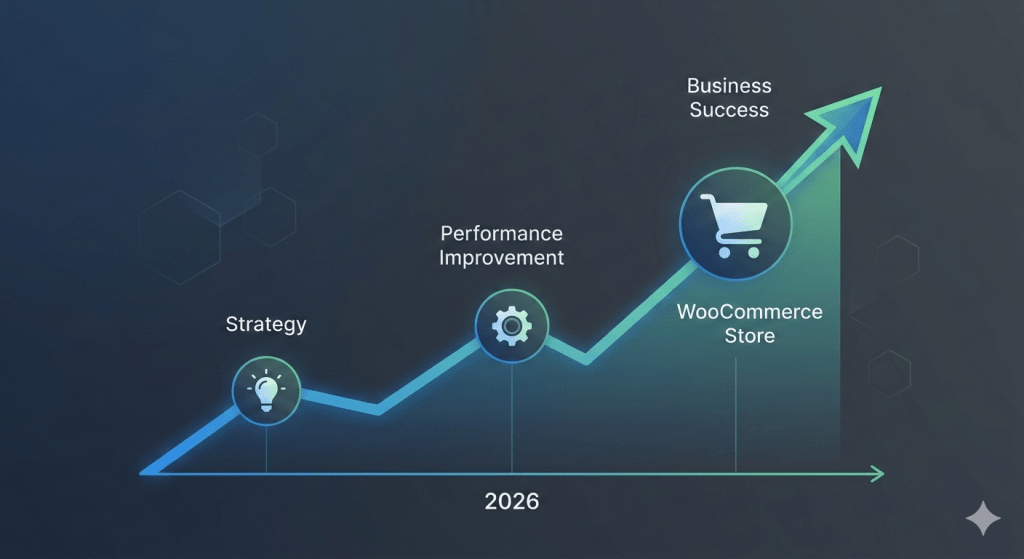
Start With Your Target Audience to Increase WooCommerce Sales
Before you spend a single dollar on ads or write a single blog post, you need to understand who you are actually selling to. This sounds obvious, but most store owners skip past it far too quickly. Understanding your audience is the first step to increase WooCommerce sales, because every marketing decision flows from knowing who you’re serving.
Your target audience shapes every decision — the keywords you target, the content you create, the tone of your product descriptions, the emails you send. When you know your customer deeply, every part of your marketing becomes more effective.
How to Define Your Ideal Customer
Start by answering a few core questions about the people most likely to buy from you:
- What problem does my product solve for them?
- Where do they spend time online — search engines, social media, forums?
- What language do they use when talking about this problem?
- What objections might stop them from buying?
- What motivates them to take action?
Once you have clear answers, you can build a simple customer profile. This profile becomes your reference point for everything. Good marketing is not about reaching everyone — it is about reaching the right people with the right message at the right time. Doing this correctly can directly help you increase WooCommerce sales by targeting buyers who are most likely to convert.
Drive Targeted Traffic to Increase WooCommerce Sales
Search engine optimisation remains the single most cost-effective way to bring qualified buyers to your WooCommerce store and ultimately increase WooCommerce sales. Unlike paid advertising, traffic from organic search does not stop the moment you cut the budget. Done correctly, it compounds over time.
Keyword Research That Helps Improve WooCommerce Revenue
Not all keywords are equal. Someone searching for “best running shoes for flat feet” is much closer to buying than someone searching for “what are running shoes.” You want to target keywords that signal buying intent — phrases that people use when they are ready to make a decision.
Focus on:
- Product-specific keywords: “buy organic cotton t-shirts online”
- Comparison keywords: “WooCommerce vs Shopify for small businesses”
- Problem-solution keywords: “how to fix slow WooCommerce checkout”
- Local keywords if you serve specific regions: “web design agency Lahore”
On-Page SEO to Increase WooCommerce Sales
Your product pages are where conversions happen. They need to be optimised not just for search engines, but for the humans actually reading them. Here is what matters most:
- Write unique product titles that include your focus keyword naturally
- Create product descriptions that answer real customer questions — not just specifications
- Add alt text to every product image
- Use structured data (schema markup) so Google can display rich snippets
- Include customer reviews on product pages — they improve both trust and rankings
- Make sure your category pages are well-optimised, not just your products
Technical SEO also plays a critical role. Slow loading times, broken links, crawl errors, and poor mobile performance all hurt your rankings. An experienced WooCommerce development team can audit your site and fix these issues at the root level, rather than applying surface-level patches.
Use Content Marketing to Increase WooCommerce Sales
Content marketing is how you build a relationship with potential customers before they ever reach your product pages. It positions your brand as a trusted authority in your niche — and that trust has real commercial value.
Think about the questions your target customers are already asking in Google. Every question is an opportunity to write a helpful blog post, create a tutorial, or publish a comparison guide. When your content answers those questions better than anyone else, you earn traffic and trust simultaneously.
When your content answers questions effectively and targets buyers intentionally, it not only builds trust but also helps increase WooCommerce sales over time.
Content Types That Work for WooCommerce Stores
- Buying guides: Help customers make informed decisions and naturally link to your products
- How-to tutorials: Show your products in real-world use — these rank well and build credibility
- Comparison articles: Target high-intent keywords like “Product A vs Product B”
- FAQs and troubleshooting guides: Build trust and reduce support requests at the same time
- Case studies and customer stories: Demonstrate results without feeling like a sales pitch
Consistency matters more than volume. Publishing one well-researched article every two weeks is far more effective than publishing five shallow posts in a hurry. Develop a content calendar, stick to it, and build internal links between your articles and product pages to strengthen your site structure.
Social Media Strategies That Help Increase WooCommerce Sales
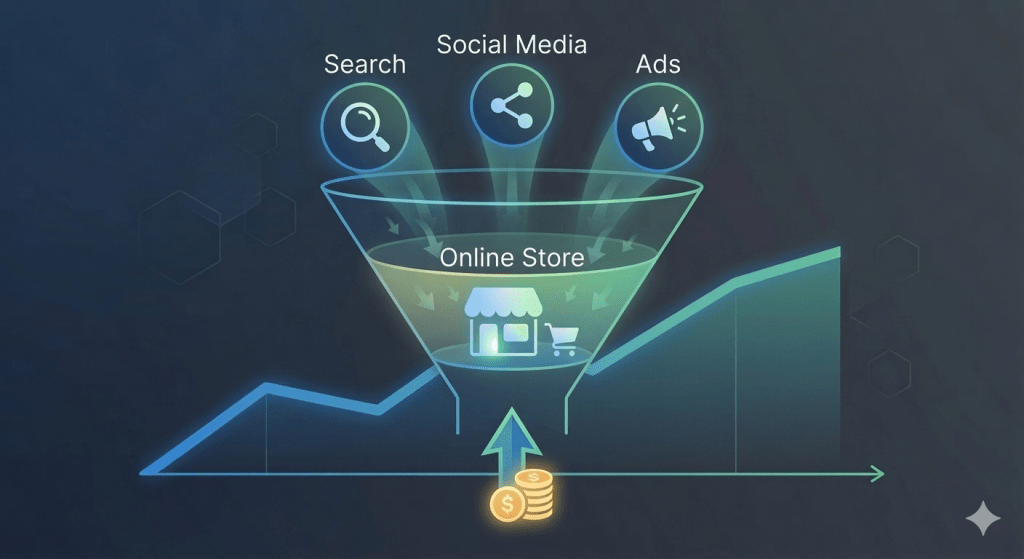
Social media can drive meaningful traffic to your WooCommerce store, but only if you focus on the platforms where your actual customers spend time. Spreading yourself thin across every platform is a common mistake that leads to mediocre results everywhere. When used strategically, social channels can help increase WooCommerce sales by bringing engaged visitors directly to your product pages.
Instead, pick one or two platforms and master them. For visual products like fashion, home decor, or food, Instagram and Pinterest are natural fits. Businesses selling B2B software or professional services will often find LinkedIn delivers better results. If your audience skews younger, TikTok offers extraordinary organic reach for creative, authentic content.
Social Commerce Is Growing Fast in 2026
Platforms like Instagram, TikTok, and Pinterest now allow users to purchase products without leaving the app. Connecting your WooCommerce catalogue to these social storefronts creates additional touchpoints for sales — and meets customers where they are already browsing.
User-generated content is also one of the most powerful social strategies available. Encourage customers to share photos of your products in use. Repost their content with permission. This kind of authentic social proof builds trust far more effectively than polished brand content ever could.
Paid Advertising: Scale What Is Already Working
Paid advertising is not a substitute for organic growth — it is an accelerant. The most effective approach is to build a foundation of organic traffic first, learn which products and audiences convert best, and then use paid ads to scale those winners. Once you identify high-performing products, paid campaigns can help you increase WooCommerce sales more efficiently and at scale.
Google Shopping Ads for WooCommerce Sales
Google Shopping campaigns connect directly to your WooCommerce product catalogue and show visual ads to people actively searching for what you sell. These ads appear at the top of search results with product images, prices, and ratings — exactly when purchase intent is highest.
To get the most from Shopping ads, your product feed needs to be clean and well-optimised. This means accurate titles, clear descriptions, correct categories, and high-quality images. A poorly maintained feed wastes budget on irrelevant clicks.
Meta Ads and Audience Targeting
Facebook and Instagram ads allow for extremely precise audience targeting based on interests, behaviours, demographics, and lookalike audiences. For WooCommerce stores, the most effective strategy is often combining a broad awareness campaign with tightly targeted retargeting campaigns aimed at previous visitors and cart abandoners.
Conversion Rate Optimisation to Boost WooCommerce Sales
Getting traffic to your store is only half the battle. If your site experience is frustrating, confusing, or untrustworthy, those visitors will leave without buying. Conversion rate optimisation (CRO) is the process of systematically improving every step of the customer journey. Proper CRO strategies can significantly increase WooCommerce sales without requiring additional traffic.
Even small improvements to your conversion rate deliver significant revenue gains. A store converting at 2% that improves to 3% has effectively grown revenue by 50% without acquiring a single extra visitor.
Optimise Your Product Pages
- Use multiple high-quality product images from different angles
- Write benefit-focused descriptions — tell customers what the product does for them
- Display stock levels to create genuine urgency when inventory is low
- Show shipping times and return policies clearly on the product page
- Place the add-to-cart button above the fold — do not make customers scroll to find it
- Add a prominent trust badge section near the call-to-action
Simplify the Checkout Experience
Cart abandonment is one of the biggest revenue leaks in ecommerce. The average rate hovers around 70%, meaning seven out of ten people who add a product to their cart leave without buying. Most abandonment is caused by friction — too many form fields, forced account creation, surprise shipping costs, or a lack of trusted payment options.
- Offer guest checkout — never force account creation
- Show order summary and total cost throughout the checkout process
- Add multiple payment options: credit card, PayPal, buy-now-pay-later
- Display security badges and SSL indicators at checkout
- Reduce form fields to only what is strictly necessary
- Use a progress indicator so customers know how many steps remain
A clean, fast, and frictionless checkout is one of the highest-return investments a WooCommerce store owner can make. Experienced WooCommerce developers can customise the checkout flow entirely to remove barriers that default themes often introduce.
Website Speed: The Silent Conversion Killer
Page speed affects both your search rankings and your conversion rate. Google uses Core Web Vitals as a ranking signal, and research consistently shows that every second of added loading time reduces conversion rates significantly. Improving performance is one of the fastest ways to increase WooCommerce sales, because faster websites create better user experiences and higher trust.
For WooCommerce stores, performance issues often come from a combination of unoptimised images, bloated plugins, shared hosting environments, and themes loaded with unnecessary features. The good news is that most of these issues are fixable with the right technical approach.
Key Areas to Improve WooCommerce Performance
- Host on quality managed WordPress hosting — shared hosting is a false economy for growing stores
- Use a content delivery network (CDN) to serve assets from servers close to your customers
- Compress and convert product images to modern formats like WebP
- Implement server-side caching and browser caching
- Audit and remove unnecessary plugins — each one adds overhead
- Minimise and defer JavaScript where possible
- Use lazy loading for images below the fold
Running a full performance audit before and after optimisation is the best way to measure real impact. Tools like Google PageSpeed Insights, GTmetrix, and Lighthouse provide detailed technical recommendations. If performance optimisation feels overwhelming, a dedicated website performance service can handle this end to end.
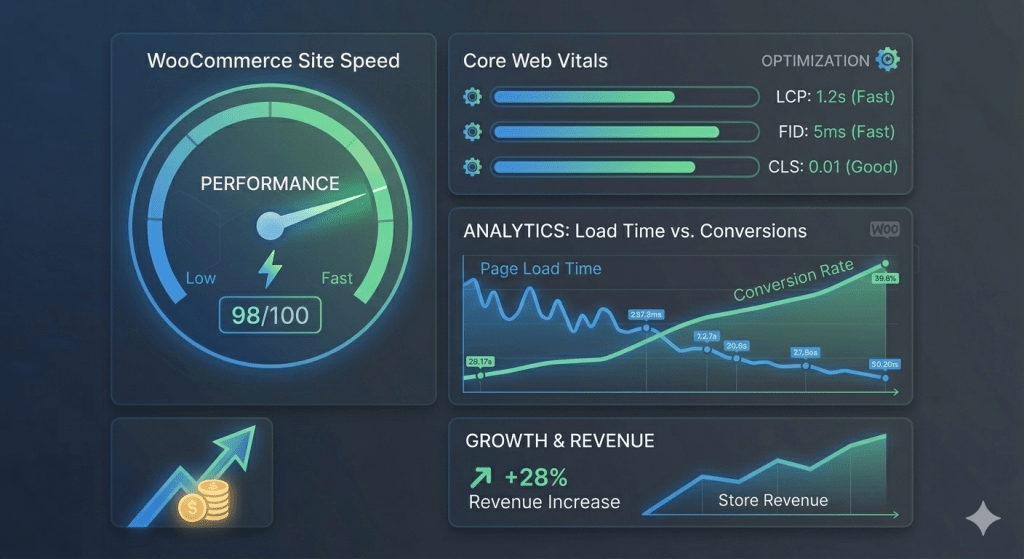
Build Customer Trust to Increase WooCommerce Sales
Trust is the foundation of every online transaction. People are handing over their payment information to a website they may have never heard of before. If your store does not feel credible and safe, they will not buy — regardless of how good your product is or how competitive your price is.
Elements That Build Customer Trust
- Genuine customer reviews on product pages — do not hide negative reviews, respond to them professionally instead
- Clear and fair return and refund policies — make them easy to find, not buried in the footer
- A real “About” page that shows the people behind the brand
- Visible contact information including phone number, email, and business address
- SSL certificate — your checkout must show the padlock icon
- Media mentions, certifications, or industry awards if applicable
- Case studies or testimonials that demonstrate real results for real customers
Trust is built across every touchpoint — not just on a single page. When your branding is consistent, your copy is professional, and your customer service is responsive, the whole experience communicates that your business is legitimate and worth buying from.
Email Marketing: Your Highest-ROI Sales Channel
Email marketing consistently delivers the highest return on investment of any marketing channel in ecommerce. Unlike social media, where algorithms control your reach, your email list is an asset you own completely. A well-nurtured list of engaged subscribers is one of the most valuable things a WooCommerce store owner can build.
Essential Email Sequences for WooCommerce Stores
- Welcome sequence: Introduce new subscribers to your brand, share your story, and offer a first-purchase incentive
- Abandoned cart series: Automatically remind people who left without buying — typically a sequence of two to three emails over 24 to 48 hours
- Post-purchase sequence: Thank customers, set delivery expectations, ask for a review, and introduce them to related products
- Win-back campaign: Re-engage customers who have not purchased in 90 or more days with a compelling offer
- Browse abandonment: Follow up with visitors who viewed specific product pages but did not add to cart
The key to effective email marketing is personalisation and relevance. Sending the same newsletter blast to your entire list is far less effective than sending targeted messages based on what customers have viewed, purchased, or shown interest in. WooCommerce integrates with tools like Klaviyo and Mailchimp to make sophisticated email automation achievable even for smaller stores.
Retargeting Strategies to Recover Lost Revenue
Most first-time visitors to your WooCommerce store will not buy immediately. They are researching, comparing options, or simply not ready yet. Retargeting allows you to bring those visitors back with relevant ads after they leave.
Modern retargeting goes far beyond showing the same banner ad repeatedly. The most effective retargeting campaigns are segmented based on behaviour:
- Homepage visitors: Show brand awareness ads that highlight your best sellers and key value propositions
- Category page visitors: Show ads featuring the product types they browsed
- Product page visitors: Show dynamic ads featuring the exact products they viewed
- Cart abandoners: Show time-limited offers or remind them what they left behind
- Past purchasers: Show complementary products or seasonal promotions
Setting up effective retargeting requires proper pixel installation and event tracking. If your Meta Pixel or Google Ads tag is not firing correctly on the right pages, your entire retargeting strategy falls apart. Getting this technical foundation right from the start saves significant wasted budget.
Analytics and Tracking: Measure What Actually Matters
You cannot improve what you do not measure. Many store owners focus on surface-level metrics like total visitors or social media followers, while ignoring the numbers that actually predict revenue growth.
The Metrics Worth Tracking in 2026
- Conversion rate by traffic source: Which channels actually produce buyers, not just visitors?
- Average order value (AOV): What can you do to increase the value of each transaction?
- Customer lifetime value (CLV): How much is each customer worth over their entire relationship with your store?
- Cart abandonment rate: Where exactly are people dropping off in the checkout process?
- Revenue by product: Which products drive the most profit, not just the most sales?
- Email open and click-through rates: Are your automations engaging your audience?
- Organic keyword rankings: Are your SEO efforts moving in the right direction?
Google Analytics 4 with WooCommerce ecommerce tracking enabled gives you most of what you need. Combined with Search Console for organic performance data and your advertising platform dashboards for paid performance, you will have a clear picture of what is working and what needs attention.
Collecting data for its own sake is not the point. The real goal is to make better decisions faster. Review your key metrics weekly, set benchmarks, identify underperforming areas, and test improvements systematically.
A Practical Sales Growth Framework for 2026
All of the strategies above work best when they are connected inside a coherent framework rather than applied in isolation. Here is a straightforward approach to building and scaling your WooCommerce sales systematically:
Build the Foundation (Months 1 to 3)
- Define your target audience and create a clear customer profile
- Audit your current website for technical SEO, speed, and conversion issues
- Fix critical technical problems first — a leaky bucket holds no water
- Set up proper analytics and conversion tracking
- Optimise your top five to ten product pages
- Create your core email sequences: welcome, abandoned cart, post-purchase
Build Traffic and Test (Months 3 to 6)
- Launch a consistent SEO content strategy targeting buyer-intent keywords
- Start small paid ad campaigns to gather conversion data
- Choose one social media platform and build a genuine presence
- Implement retargeting campaigns for cart abandoners and product viewers
- A/B test key conversion elements: headlines, CTA buttons, product page layouts
Scale What Works (Month 6 and Beyond)
- Increase budgets on proven paid channels
- Expand your content library with new guides, case studies, and comparison articles
- Grow your email list actively and refine your segmentation
- Add upsell and cross-sell features to increase average order value
- Explore new traffic channels and audience segments based on your data
- Review and improve your customer retention strategy — acquiring a new customer costs five times more than retaining an existing one
This phased approach prevents overwhelm and ensures each new strategy is built on a solid foundation. Trying to do everything simultaneously usually results in doing nothing well.
Building a Long-Term Strategy That Survives Algorithm Changes
Platforms change. Algorithms update. Ad costs fluctuate. The WooCommerce stores that grow consistently over years are not the ones chasing every new tactic — they are the ones that build genuine brand equity alongside their technical and marketing capabilities.
Brand equity means that people recognise your name, associate it with quality and trust, and choose you over lower-priced alternatives. You build it through consistent quality, authentic communication, real customer service, and a genuine commitment to your audience’s needs.
- Invest in your email list as a channel you own and control completely
- Build SEO authority through consistent, high-quality content over months and years
- Prioritise customer experience at every stage — repeat customers have dramatically higher lifetime value
- Develop unique products or bundles that competitors cannot easily copy
- Treat your data as a long-term competitive advantage — the insights you accumulate over time become more valuable than any individual campaign
Patience combined with consistency is genuinely the most underrated growth strategy in ecommerce. Most store owners give up on the right strategies before they have had time to compound.
Conclusion: How to Increase WooCommerce Sales in 2026
Growing a WooCommerce store in 2026 requires more than luck and a good product. It requires a clear understanding of your customers, a technical foundation that supports fast and seamless shopping, traffic strategies that bring the right visitors, and conversion optimisation that turns those visitors into buyers.
If your goal is to increase WooCommerce sales, you must combine targeted traffic with strong website performance, trust-building elements, and continuous optimization. When these elements work together, sustainable growth becomes achievable.
The strategies in this guide are not theoretical. They are the same approaches that successful ecommerce businesses are using right now to grow their revenue and consistently increase WooCommerce sales. The key is to approach them systematically, measure your results honestly, and improve continuously.
You do not have to master every channel at once. Start with your foundation, fix what is broken, build your traffic, and optimise for conversions. Each improvement builds on the last, and over time, the results compound into something genuinely significant.
The stores that win are the ones that treat growth as a discipline, not a gamble — and that commitment is what ultimately helps them increase WooCommerce sales year after year.
Need Help Growing Your WooCommerce Store?
At WebExtent, we work with WooCommerce store owners who are serious about growing their online revenue. Our team combines WooCommerce development expertise, data-driven SEO strategy, conversion optimisation, and website performance engineering into a coherent growth approach — not a collection of disconnected services.
Whether you need a complete technical audit, a content strategy built around buyer intent, a faster and better-converting checkout, or a full-scale digital growth partnership, we can help you increase WooCommerce sales and maximize your store’s potential.
Reach out to the WebExtent team to discuss your WooCommerce goals. We are happy to help you implement strategies that drive traffic, boost conversions, and increase revenue consistently
Subscribe to Us on YouTube
Get exclusive tutorials, behind-the-scenes content, and expert insights delivered directly to your feed.
We Are Available On:
Facebook:
https://facebook.com/webextent.net/
Instagram:
https://www.instagram.com/webextentofficial/
Twitter (X):
https://twitter.com/WebExtent
Tags: increase sale sales SEO website sale woocommerce sales



0 comments